


Bangladesh has seen an explosive rise in battery-powered e-rickshaws, transforming short-distance travel in cities like Dhaka. According to reporting by Somoy News, the country now has several million e-rickshaws on the road, a jump from a few hundred thousand less than a decade ago. The vehicles are popular for their low fares and zero tailpipe emissions, but most operate informally—unregistered, unlicensed, and outside any national waste-management system.
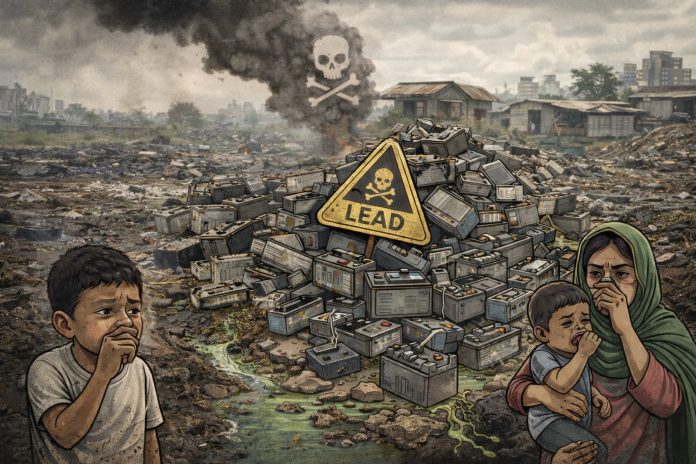
That rapid, largely unmanaged growth is creating a hidden environmental and public-health problem: toxic battery waste. Most e-rickshaws rely on lead-acid batteries with short lifespans. Analysis by The Business Standard warns that discarded batteries are often dismantled in informal workshops or dumped near homes, drains, and open land. During crude recycling, lead dust and acidic liquids can leach into soil and water, exposing workers and nearby residents to heavy-metal contamination.
Urban transport experts note that this pollution risk extends well beyond recycling sites. Lead can persist in soil for decades and enter the food chain through vegetables grown on contaminated land or fish from polluted water bodies. Health specialists cited in the analysis link chronic lead exposure to neurological damage, reduced cognitive development in children, and long-term kidney and cardiovascular problems—risks that disproportionately affect roadside communities and informal labourers.
The challenge is rooted in a policy vacuum. E-rickshaws have expanded faster than regulations on vehicle licensing, battery standards, or end-of-life disposal. While the sector delivers affordable mobility and jobs, the absence of formal oversight means the environmental costs are effectively shifted to the public.
Benefits versus hidden costs:

Policy analysts say solutions are available but require coordinated government action. Recommendations discussed by transport and environmental institutions include mandatory registration and licensing, battery buy-back or deposit schemes, certified recycling facilities, and a gradual shift to longer-life lithium-ion batteries paired with regulated grid charging. Without such measures, Bangladesh’s push for sustainable mobility risks undermining the urban environment it aims to protect.
Takeaway: E-rickshaws are reshaping city transport in Bangladesh, but unless battery waste is brought under formal regulation, today’s low-cost mobility could leave a long-lasting toxic legacy.