


– Mamun Kabir
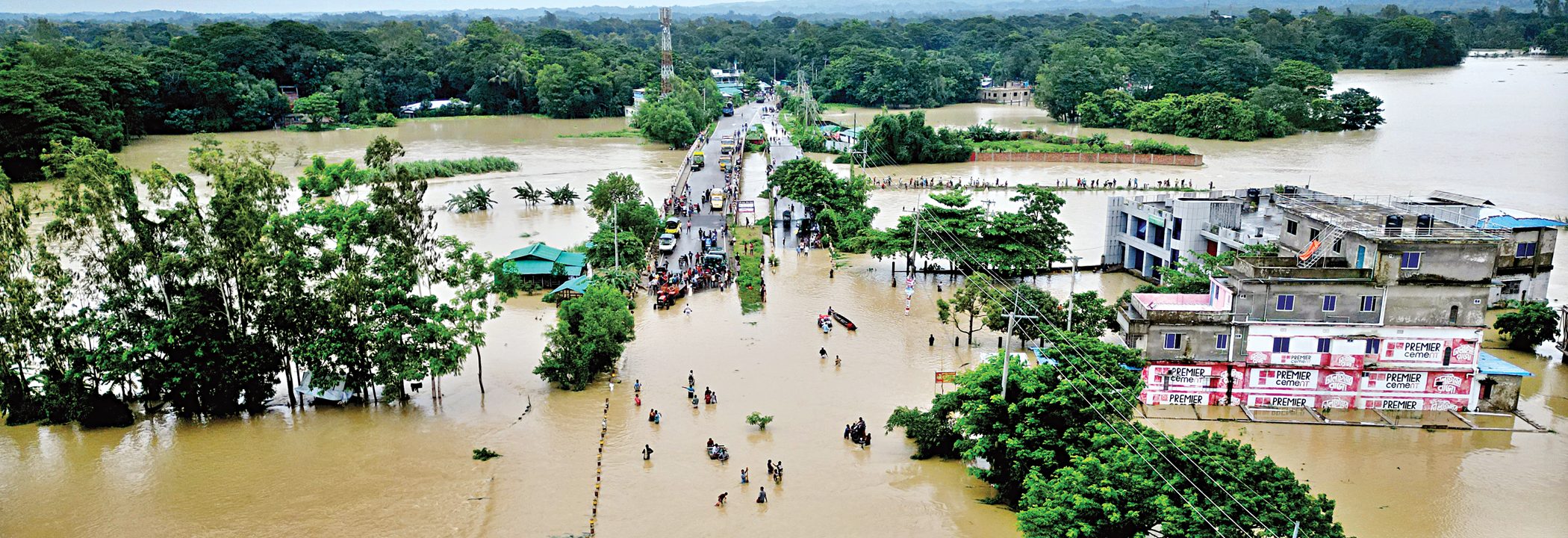
Dhaka—the heart of Bangladesh is the center of the nation’s politics, economy, education, culture, and aspirations. Yet today, the very city that once breathed freely is choking on polluted air, inundated with water during the monsoon, and trapped year-round in a web of complex mismanagement. Once a city where wind flowed along its streets, shaded by greenery, with life and vibrancy along the riverbanks, Dhaka is steadily losing its familiar character.
Population explosion, uncontrolled urbanization, unplanned expansion, and long-term neglect of the environment have left their harsh mark. Compared to other global megacities, the reality is stark—Dhaka now ranks near the bottom in livability. According to a recent Economist Intelligence Unit (EIU) survey of 173 cities, Dhaka stands almost at the end (around 170+), with war-torn cities like Damascus and Tripoli ranking above it. This is not just a statistic—it is a stark warning about our urban life.
This situation signals that unless we take the right steps now—embracing planned urbanization, technology-driven infrastructure, and environmentally friendly policies—Dhaka will not just remain an inconvenient city; it could become the epicenter of an urban-environmental disaster.
Dhaka’s Crisis: Density, Pollution, and Planning Deficit
Recent statistics show that the environmental and livability crisis in Dhaka is not the result of isolated problems—it is the outcome of decades of unplanned urban management. Dhaka currently houses nearly 21.7 million people. Spread over just over 300 square kilometers, this immense population makes Dhaka one of the most densely populated megacities in the world. The city now has roughly 48,000 people per square kilometer, putting extreme pressure on public amenities, infrastructure, transportation, waste management, and healthcare services.
This uncontrolled urban sprawl and unplanned development have directly disrupted Dhaka’s ecological balance. According to World Health Organization standards, an ideal city should have at least 25% green coverage, yet Dhaka’s green areas have fallen below 9%. In a city where trees, open spaces, and urban forests are essential for improving quality of life, the scarcity of green land contributes to rising temperatures, poor air quality, and increased mental stress for residents.
It is not just greenery—Dhaka’s water bodies are in a critical state. The canals, rivers, and ponds that once carried the pulse of city life now constitute barely 2–3% of the city’s area. This contraction prolongs waterlogging during the rainy season and intensifies urban heat during dry months. Natural water channels that once acted as drainage and temperature regulators have mostly been filled, encroached upon, or polluted, becoming almost invisible.
Environmental realities are even harsher in terms of air quality. Dhaka consistently ranks among the world’s most polluted cities. The city’s Air Quality Index (AQI) often ranges between 200–300 throughout the year, far above the WHO’s safe threshold of 50, where long-term exposure becomes hazardous to health. This is not merely an environmental crisis; it is a direct threat to residents’ respiratory health, cardiovascular wellbeing, child development, and the safety of the elderly.
Collectively, these facts make it clear: population pressure, lack of green space, shrinking water bodies, and prolonged planning neglect have pushed Dhaka toward a profound urban crisis. The city now stands at a critical juncture—without timely and effective intervention, it risks becoming uninhabitable. Addressing these challenges is possible through integrated policies, science-based planning, and sustainable urbanization, provided city development is guided by long-term strategy rather than ad hoc decisions.
Green Urbanization: The Core of Livability
A truly livable city is not merely a collection of high-rise buildings, wide roads, or reduced traffic congestion—it is an urban ecosystem where people can live safely, healthily, and with dignity. According to World Health Organization (WHO) standards, every citizen should have access to at least 9 square meters of green open space. The reality, however, is stark: in Dhaka, only about 1% of land is dedicated to parks and gardens—far below what is required.
A greener Dhaka would not just beautify the city—it would serve as life-saving infrastructure. Strategic tree plantation, preservation of water bodies, and creation of structured green corridors across the city can significantly reduce urban temperatures, lower the risks of air pollution, and help manage floods and waterlogging. Simultaneously, citizens’ physical and mental wellbeing would improve, public recreation spaces and community areas would expand, and lost birds, animals, and urban biodiversity could return. Research shows that effective greening can reduce air pollution by 15–30% and lower temperatures by 3–5°C.
Planned green urbanization is thus the first step toward Dhaka’s renaissance. In a city where trees, parks, rooftop gardens, and bio-retention water bodies together form the foundation of a stable, safe, and healthy urban environment, long-term sustainability is achievable. If realized, this transformation would turn Dhaka into not just a modern city, but a world-class, exemplary green city.
Renewable Energy: Solar Power as Dhaka’s Path to an Energy Revolution
With Dhaka’s rapidly growing population and urbanization, the city’s electricity demand is increasing exponentially. Simultaneously, brick kilns, vehicles, industries, and fossil fuel–dependent energy systems have pushed air pollution to levels that pose severe threats to public health and the environment. In this context, renewable energy—especially solar power—is not merely an alternative energy source; it is an essential solution to achieve carbon emission reduction targets under the Paris Agreement.
The proposal to transform Dhaka into a decentralized, green energy city centers on converting every residential and commercial building into a small-scale solar energy production unit. By installing solar panels on rooftops and connecting the generated electricity to the national grid, homeowners can receive bill credits, tax incentives, or financial benefits. Each household would not just be a consumer but a producer-consumer of energy, relieving pressure on the national distribution system, reducing fossil fuel import costs, and making the city’s energy infrastructure more resilient and locally sourced.
This form of energy democratization would create a citizen-driven electricity network, where millions of rooftops contribute to the city’s power production, significantly supporting national electricity demand. Cities worldwide have already adopted micro-grids and community energy systems, where local generation enhances efficiency, reliability, and environmental sustainability.
Bangladesh has already demonstrated international success in solar electrification, with over 6 million solar home systems revolutionizing rural electrification. Yet, Dhaka’s rooftop potential remains largely untapped. If residential, commercial, institutional, and government buildings in the city install solar panels, rooftop solar alone could generate approximately 3,500–4,000 MW of renewable energy—nearly a quarter of current national usage and a substantial contribution to peak-hour demand. Notably, peak electricity demand in the city coincides with peak solar availability, making practical implementation both rational and effective.
Decentralized solar energy not only increases grid efficiency—it also provides a tangible pathway for Bangladesh to meet its climate commitments. Expanding the use of renewable energy can significantly reduce carbon emissions, positioning Dhaka as a leader in fulfilling the Nationally Determined Contributions (NDCs) under the Paris Agreement. In the long term, this transformation would shift Dhaka from a fossil fuel–dependent, pollution-trapped city into a clean, self-reliant, carbon-conscious, and future-ready metropolis—where every rooftop, citizen, and unit actively contributes to combating climate change.
Livable Dhaka: Beyond Environment and Energy—A Holistic Urban Transformation
Transforming Dhaka into a livable city is not merely about reducing air pollution or increasing solar energy production; it requires an integrated, multi-layered process of urban transformation. A modern city becomes truly livable when equal emphasis is placed on environment, infrastructure, public services, and citizen wellbeing. Therefore, Dhaka’s development vision must center on multi-dimensional solutions, including improved public transportation, safe and accessible cycling and walking paths, effective waste and water management, green playgrounds and public parks, and modern health and education services accessible to all.
Experience from cities in Europe and Asia demonstrates that when urban areas adopt green infrastructure, renewable energy, and participatory planning, residents’ quality of life improves significantly, and socio-economic vitality increases. Dhaka has the same potential, provided we pursue an integrated path of transformation.
The vision for a transformed Dhaka can be built upon five key pillars. First, transport transformation aims to make the city public transport–oriented, while ensuring safe and extensive cycling and walking paths, complemented by widespread infrastructure for electric vehicle charging. Second, environmental restoration and preservation focuses on rescuing canals and rivers, reconnecting natural waterways, enforcing strict industrial pollution controls, and encouraging energy generation from waste. Third, energy governance seeks to mainstream renewable energy through mechanisms such as feed-in tariffs, simplified net-metering, and robust solar energy programs. Fourth, data-driven smart urban development emphasizes the use of smart traffic signals, real-time air quality monitoring, and open data systems to ensure transparent and efficient urban management. Finally, citizen participation plays a crucial role, involving the establishment of ward-level green committees, school-centered environmental education, and the promotion of “urban stewardship,” enabling citizens to actively contribute to shaping Dhaka’s sustainable future.Realizing the dream of a livable Dhaka is not the responsibility of a single entity. It requires the coordinated effort, commitment, and accountability of the government, businesses, service providers, and most importantly, citizens. The potential is real, the path is clear—what is needed now is planned programs, good governance, and strong political will. If Dhaka chooses, it can change—and the time is now.
Transformation: From Policy to Implementation—The Time is Now
International experience shows that combining planned greening, renewable energy, and citizen participation makes urban transformation achievable. For example, Singapore has created “green corridors” along canals and rivers to control urban heat and flood risks, while Copenhagen has made rooftop gardens mandatory, significantly reducing air pollution and supporting urban biodiversity.
To transform Dhaka into a livable, sustainable, and green city, effective policies and integrated implementation are essential. First, city planning must adopt specific measures, such as creating green corridors along canals and rivers. These corridors would retain excess water during monsoon, maintain natural flows in dry seasons, and provide safe pathways for walking and cycling. Government buildings should have 100% green roofs, and a fixed percentage of private rooftops should be converted into rooftop gardens, increasing green coverage and regulating urban temperatures.
Second, renewable energy and citizen participation must be integrated into urban transformation. Providing feed-in tariffs, tax incentives, and other financial benefits for solar power production would encourage citizens to generate energy from their rooftops. Each household and building becomes both a producer and consumer of energy, reducing electricity demand, dependence on fossil fuels, and carbon emissions. Furthermore, opening school playgrounds for public use during designated hours would increase public space utilization and foster environmental awareness among citizens.
Third, the city’s overall livability and sustainable development depend on coordinated participation from government, businesses, and citizens. By combining planned greening, energy governance, efficient transport, and data-driven urban management, Dhaka can become a model metropolis—resilient to climate change, safe for public health, and inspirationally livable for future generations.
With a history spanning over 450 years, Dhaka is more than a city; it is the center of people’s hopes, memories, work, and life—the heart of the nation, awaiting the challenges of a new era. Transforming it into a livable, green, energy-self-reliant, and safe city requires collective, planned, technology-driven, and responsible action. Every house can become a small solar power station, sharing its energy benefits among citizens; green corridors, effective urban planning, and modern infrastructure would ensure that people not only survive but thrive in health and happiness.
Dhaka has repeatedly reimagined itself—first as a Mughal trade hub, then the provincial capital under Pakistan, and later as the national capital and industrial-commercial center of independent Bangladesh. Now is the time for its fourth transformation: a green, solar-powered, safe, and human-centric city, where people not only live but dream and realize those dreams. And it is possible—the time is now. If we act proactively today, Dhaka can be handed to future generations not just as a large city, but as a city of realized aspirations.
Author: Mamun Kabir, Environmental Activist
