




Green Time | New York
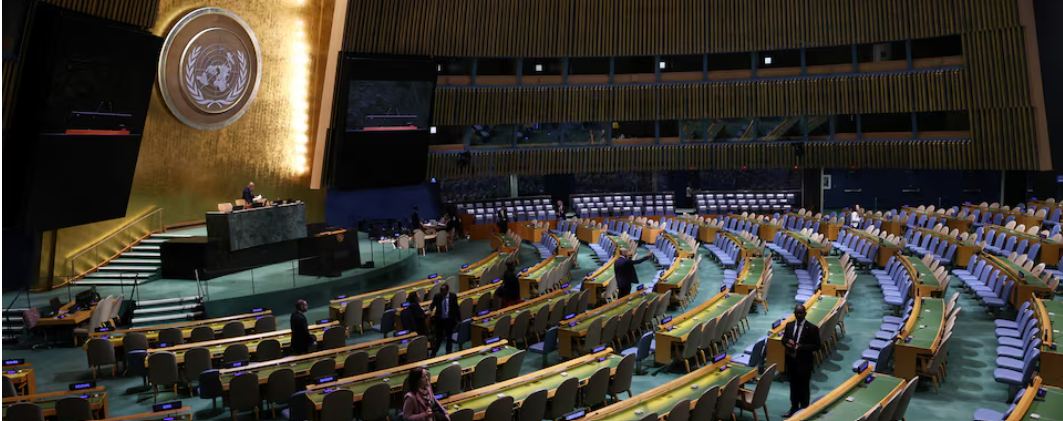
As world leaders gathered in New York for the 81st Session of the United Nations General Assembly (UNGA 81), climate change and environmental security emerged as major themes alongside wars, geopolitical tensions, artificial intelligence and global economic uncertainty.
The 2026 high-level week, held at UN Headquarters in the United States, is taking place under the theme “Restoring trust, managing transformation: A United Nations that delivers for all.” The General Debate began on 22 September, bringing together leaders from the UN’s 193 Member States. Bangladesh’s Khalilur Rahman is serving as President of the 81st General Assembly session.
Climate Action Gets Its Own High-Level Summit
Climate change was not confined to individual leaders’ speeches this year. On 23 September, UN Secretary-General António Guterres convened a dedicated High-Level Event on Climate Action and the Just Transition, gathering governments, financial institutions, businesses and civil society.
The meeting concentrated on three interconnected priorities: accelerating the transition towards clean and renewable energy, increasing affordable climate finance and investment for developing countries, and strengthening adaptation and resilience for populations already experiencing worsening climate impacts.
Guterres called on countries to go further on renewable energy, finance and adaptation, arguing that international cooperation remains essential even as geopolitical divisions intensify. The UN described the present situation as an era in which climate impacts are accelerating while the global energy transition is simultaneously gaining momentum.
This distinction is becoming increasingly important in global climate diplomacy. The discussion is moving beyond setting distant emissions targets towards questions of who will finance the transition, how developing economies will gain access to technology and capital, and how workers and vulnerable communities will be protected during the transformation of energy systems.
Sea-Level Rise Becomes a High-Level Political Issue
One of the most significant environmental elements of UNGA 2026 came on 24 September, when the General Assembly held a high-level meeting devoted specifically to the existential threats posed by sea-level rise.
The meeting focused on international cooperation, resilience, financing and protection for small island developing states and low-lying coastal regions. According to the UN, rising seas increasingly threaten settlements, infrastructure, freshwater resources and the long-term viability of vulnerable coastal communities.
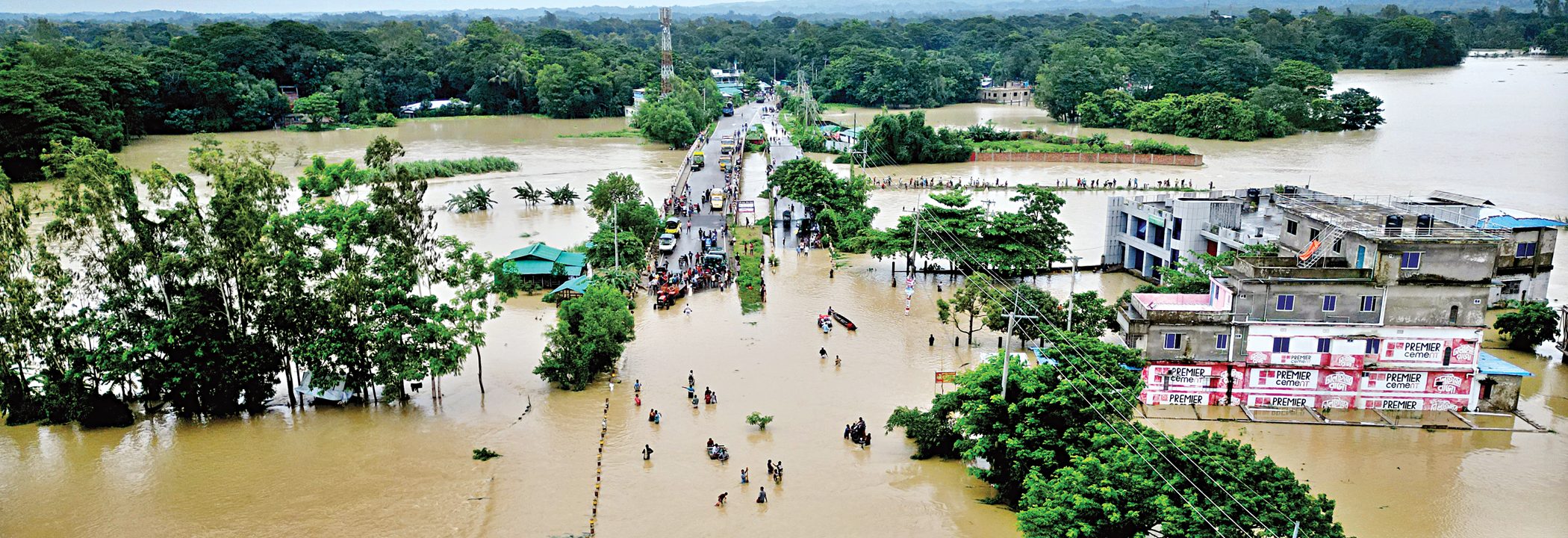
For countries such as Bangladesh, the issue carries particular relevance. The international debate over sea-level rise is increasingly connected not only with emissions reduction but also with adaptation finance, resilient infrastructure, displacement, loss and damage, water security and long-term coastal planning.
UNGA President Khalilur Rahman reinforced this interconnected perspective during a 25 September high-level event titled “Sagarmatha to the Sea: A Call to Action for a Climate-Resilient Future.” He described climate pressures from mountains to oceans as part of a single interconnected crisis.
Bangladesh Raises Climate Justice and Finance
Bangladesh also used the UNGA platform to highlight the financing challenges facing climate-vulnerable states.
Speaking on behalf of Bangladesh at the Fourth Climate Vulnerable Forum Leaders Meeting in New York, Special Assistant to the Prime Minister on Environment, Forest and Climate Change Affairs Dr Md Saimum Parvez called for stronger international climate action, greater climate justice and fairer access to finance for vulnerable countries.
For many developing economies, access to climate finance remains as important as the overall amount pledged. High borrowing costs, debt burdens and complicated financing mechanisms can make large-scale adaptation and clean-energy projects difficult to implement.
That financial challenge is increasingly being acknowledged beyond traditional climate institutions. The World Bank and IMF announced changes to their joint debt-sustainability framework for low-income countries in September, with the revised approach designed to better consider long-term challenges including climate change.
From Climate Promises to Implementation
Another noticeable feature of the 2026 discussions is the stronger emphasis on implementation.
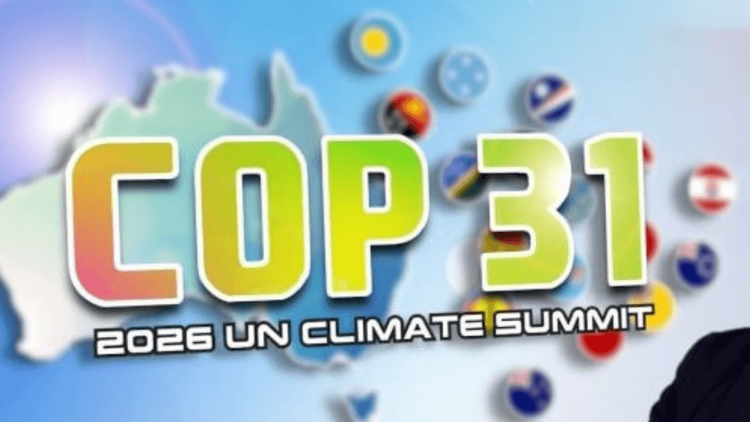
Türkiye, which will host COP31 in Antalya from 9–20 November 2026, used the UN meetings in New York to outline its climate summit agenda. COP31 President Murat Kurum said the forthcoming summit would focus heavily on converting existing climate commitments into practical programmes and investment-ready projects.
The proposed agenda includes clean energy, climate-resilient cities, green industrialisation, circular economy approaches, zero waste, food security and mechanisms designed to connect developing countries with technology and finance.
This reflects a wider change in climate diplomacy. After years dominated by negotiations over targets and pledges, attention is increasingly turning toward electricity grids, renewable-energy deployment, industrial transformation, financing mechanisms, urban resilience and measurable implementation.
The scale of the challenge remains substantial. A report released during the New York meetings found that, despite record renewable-energy deployment, the global rate of renewable expansion would still need to more than double by 2030 to meet existing international climate objectives.
A Different Climate Message from Washington
The climate discussions at UNGA also highlighted significant differences between governments over the direction of international climate policy.
US President Donald Trump used his 22 September General Assembly address primarily to discuss national sovereignty, security, Iran, migration, artificial intelligence and American foreign policy. The White House’s official summary of the speech did not place climate change or environmental cooperation among its principal themes.
That contrasted with the climate track led by the UN Secretary-General, which called for faster renewable-energy deployment, stronger adaptation efforts and increased financing for developing countries. Reuters reported that climate change nevertheless remained an important part of the wider UNGA agenda as world leaders arrived in New York amid rising temperatures and broader questions about international cooperation.
The contrast illustrates one of the central realities confronting global environmental diplomacy in 2026: countries continue to differ substantially over energy policy, fossil fuels, regulation, financing responsibilities and the appropriate role of multilateral institutions.
Climate Is Increasingly an Economic and Security Question
Perhaps the clearest message from UNGA 2026 is that climate change is no longer being discussed only as an environmental issue.
Energy security, food production, water scarcity, debt, migration, coastal infrastructure and industrial competitiveness are increasingly part of the same conversation.
The UN Environment Programme said during the New York meetings that climate solutions can simultaneously support economic growth, employment, resilience and public health, while warning that overlapping international crises cannot become a justification for delaying action.
Recent energy disruptions have made that relationship even more visible. Countries are seeking greater energy security while simultaneously attempting to expand renewable energy and reduce dependence on volatile fossil-fuel markets. At the same time, some alternative fuels carry their own environmental risks: a September study warned that rapid growth in conventional crop-based biofuels could intensify pressure on agricultural land, water and food systems without adequate safeguards.
From New York to COP31
UNGA 2026 therefore serves as an important diplomatic bridge between international political discussions and the next major round of climate negotiations at COP31 in Türkiye.
The central question is increasingly less about whether climate change belongs on the international agenda. It is about whether governments can translate existing agreements into financing, renewable-energy infrastructure, adaptation programmes and tangible protection for people already facing climate impacts.
For climate-vulnerable nations such as Bangladesh and small island states, the New York meetings have again brought climate justice, adaptation finance and sea-level rise into the highest level of international diplomacy.
What happens after the leaders leave New York — particularly when governments reconvene at COP31 in November — will indicate how much of the language heard at UNGA 2026 can be converted into implementation.