


By Mamun Kabir
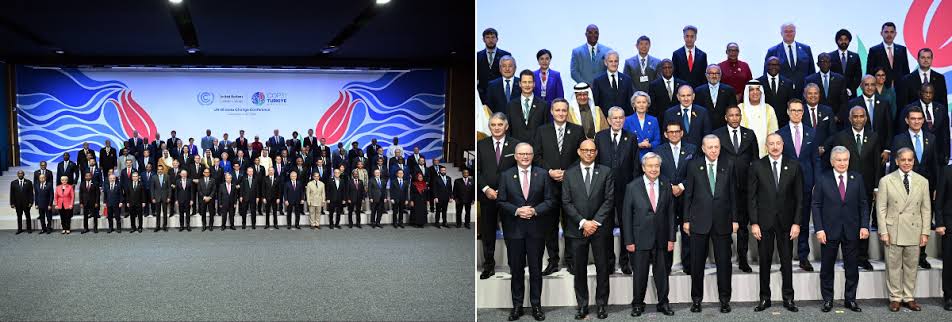
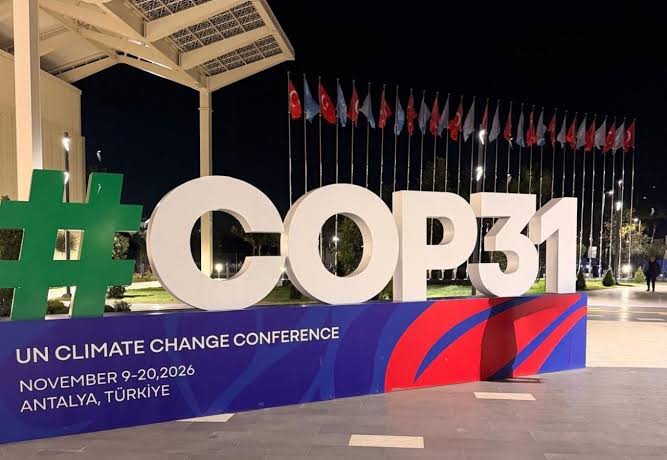
The world has gathered in Antalya, Türkiye, for the 31st Conference of the Parties to the United Nations Framework Convention on Climate Change (COP31), at a time when the consequences of global warming are becoming increasingly visible, devastating and difficult to ignore. From catastrophic floods and prolonged droughts to extreme heat, rising sea levels and biodiversity loss, the climate crisis is no longer a distant environmental concern. It is a profound threat to human security, economic stability, social justice and the future of millions of people.
For Bangladesh, the stakes are particularly high. Despite contributing a very small share of global greenhouse gas emissions, the country remains among the most climate-vulnerable nations. Its geographical location, densely populated deltaic landscape, dependence on climate-sensitive livelihoods and widespread poverty make it exceptionally exposed to the consequences of a warming planet.
COP31, therefore, should be more than another international gathering where governments repeat familiar commitments. It must become a platform for translating political promises into measurable action. Bangladesh must use this opportunity to articulate a stronger and more comprehensive position- one that connects climate finance with human rights, adaptation with ecosystem protection, and international responsibility with the everyday realities of vulnerable communities.
The central message should be clear. Climate justice cannot remain a diplomatic slogan. It must translate into financial resources, technological support, accountability and tangible improvements in the lives of those most affected by climate change.
Climate finance: Grants, not additional debt
Climate finance should be Bangladesh’s foremost priority at COP31. Countries that have contributed least to the climate crisis should not be forced to borrow money to address its consequences.
For years, developing countries have called upon industrialized nations to fulfil their climate finance obligations. Yet the gap between the financial resources required and the support actually delivered remains enormous. Even when funding is made available, it frequently comes in the form of loans, including non-concessional loans, adding to the debt burden of already vulnerable economies.
Bangladesh must therefore demand predictable, accessible and grant-based climate finance, particularly for adaptation and addressing loss and damage. The application and approval procedures of international climate funds must also be simplified so that countries with limited institutional and technical capacities are not disadvantaged.
The New Collective Quantified Goal on Climate Finance, agreed at COP29, sets a target of at least USD 300 billion annually by 2035 for developing countries, within a broader ambition to scale up financing from all sources to USD 1.3 trillion annually. However, the critical question is not simply how much money is pledged, but how much is delivered, in what form and to whom.
Bangladesh’s National Adaptation Plan (2023–2050) and its updated climate commitments require substantial investment. International support must be aligned with these national priorities rather than driven primarily by donor preferences.
Climate finance is not charity. It is a matter of historical responsibility, fairness and international obligation.
Making Loss and Damage Fund work for vulnerable communities
The establishment of the Loss and Damage Fund was a landmark achievement in international climate negotiations. However, creating a fund is not the same as ensuring that climate-vulnerable communities receive timely, adequate and meaningful assistance. For countries like Bangladesh, the real test of this mechanism lies in whether it can translate international commitments into tangible support for people whose homes, livelihoods, land and social security are being destroyed by climate-related impacts.
Bangladesh’s vulnerability is reflected in compelling data. According to the World Bank’s Climate Risk Country Profile: Bangladesh (2024), more than 90 million people, approximately 56 per cent of the country’s population live in areas exposed to multiple climate-related hazards, including cyclones, flash floods, riverine floods and coastal flooding. The WorldRiskReport 2025 ranked Bangladesh 11th among 193 countries in terms of disaster risk, placing it among the countries facing very high levels of risk. These figures demonstrate that climate vulnerability in Bangladesh is not confined to a few geographically isolated communities; it affects a substantial proportion of the national population.
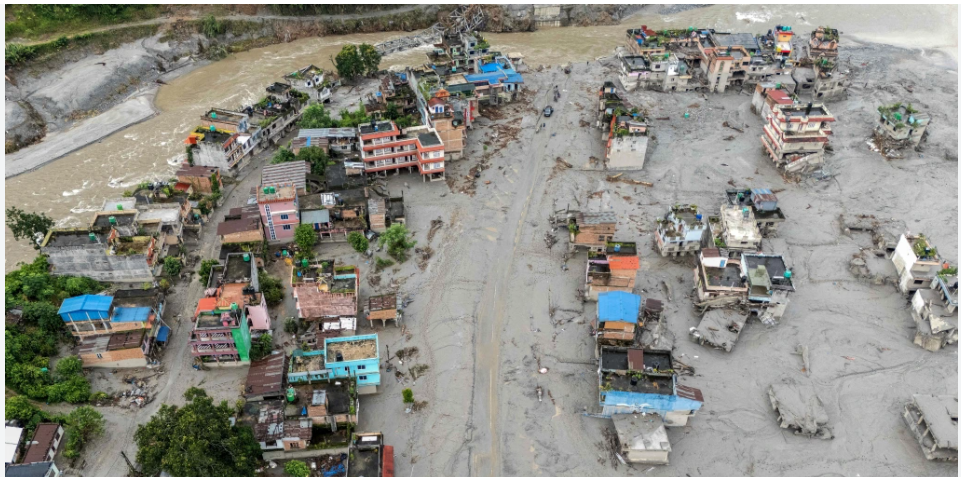
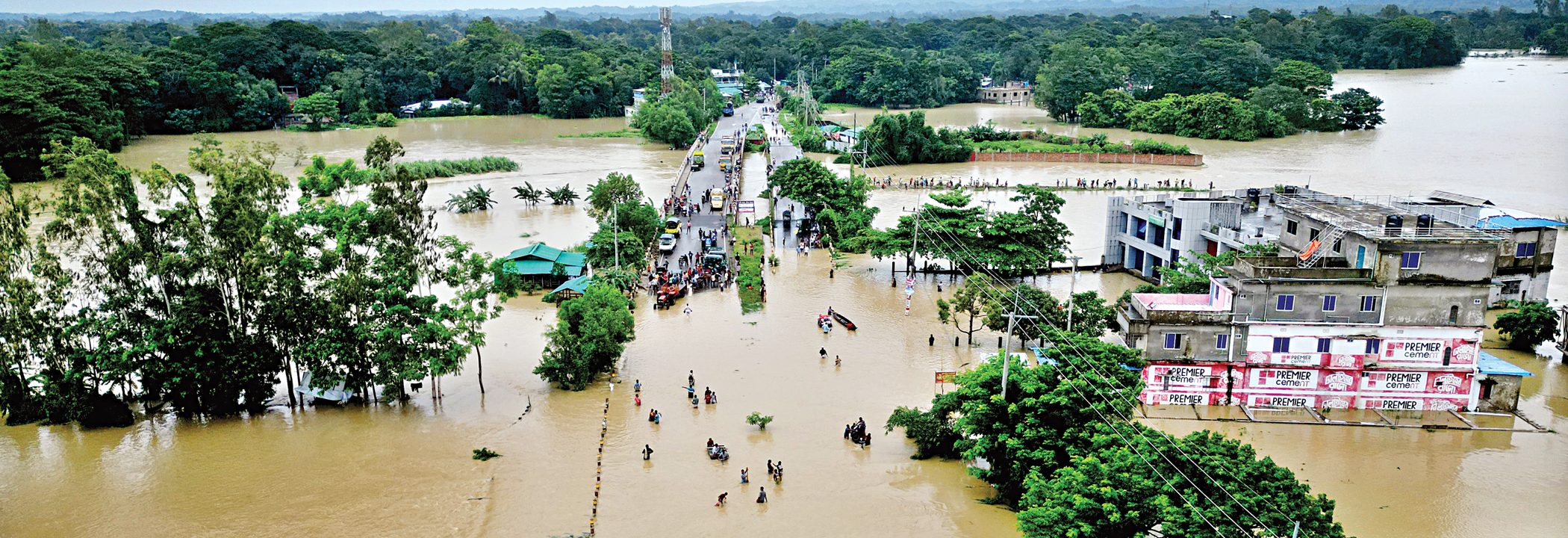
The human and economic consequences are already visible. Riverbank erosion continues to destroy homes, agricultural land and community infrastructure, forcing families to abandon ancestral settlements and traditional livelihoods. The WorldRiskReport 2025, citing CEGIS data, reported that approximately 2,860 hectares of land were lost to riverbank erosion in Bangladesh in 2019 alone. Coastal communities face recurring cyclones, tidal surges and saline water intrusion, which undermine agricultural productivity and access to safe drinking water. The 2024 floods further exposed the scale of the crisis. According to the UN-led Humanitarian Response Plan, the August flash floods affected approximately 5.8 million people across 11 districts in eastern Bangladesh. Nearly 191,099 hectares of crops were damaged, resulting in the loss of almost 500,000 tons of rice. Such disasters do not merely destroy physical assets; they undermine food security, household income, education, health and the capacity of families to recover.
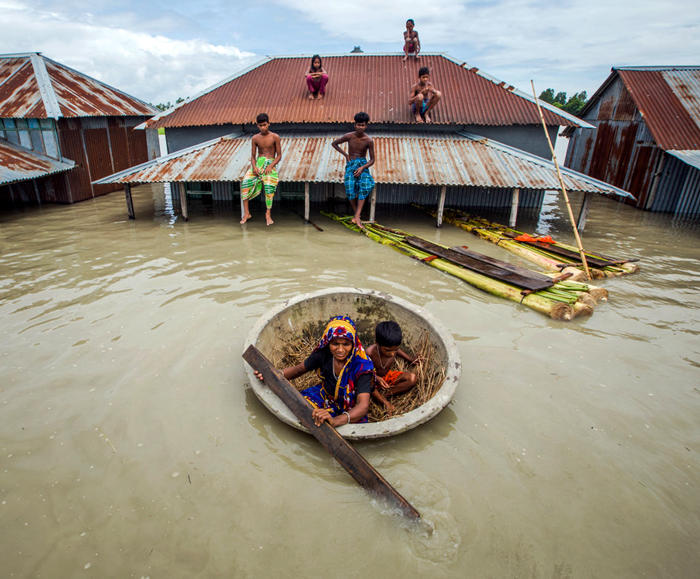
In the haor regions, recurrent flash floods can wipe out standing Boro crops within days, leaving smallholder farmers with mounting debts and no immediate alternative source of income. In coastal districts, prolonged salinity intrusion affects agricultural land, freshwater sources and fisheries, gradually eroding the foundations of local economies. These are not isolated humanitarian emergencies but interconnected and, in many cases, cumulative losses that conventional adaptation measures and short-term relief programs cannot adequately address. Some losses, including the destruction of ancestral land, cultural heritage, traditional knowledge, community networks and biodiversity, are irreversible and cannot be fully compensated through financial assistance alone.
Against this backdrop, Bangladesh must advocate for adequate, predictable and accessible contributions to the Loss and Damage Fund. Funding arrangements should prioritize grants rather than loans, particularly for countries already facing substantial development and debt pressures. Access procedures must be simplified, response mechanisms made faster and allocation criteria designed to reflect actual vulnerability, exposure and recovery needs. Both economic and non-economic losses must be explicitly recognized, including the loss of homes, land, livelihoods, cultural identity, social cohesion and ecosystem services.
Equally important is ensuring that financial resources reach the communities most affected by climate change. The Fund should support locally informed and community-led recovery initiatives, including livelihood restoration, housing reconstruction, rehabilitation of agricultural land, access to safe drinking water, and the restoration of damaged ecosystems. Women, children, Indigenous Peoples, persons with disabilities, smallholder farmers, fishers and climate-displaced populations must receive particular attention in funding decisions.
Most importantly, climate-affected people must not remain passive recipients of international assistance. They should have meaningful opportunities to identify their own needs, participate in designing interventions and monitor how resources are allocated and utilized. Transparent, participatory and accountable funding mechanisms are essential to ensure that support reaches those who need it most.
For Bangladesh, making the Loss and Damage Fund work is not simply a matter of securing additional financial resources. It is about recognizing historical responsibility, protecting human dignity and ensuring that communities bearing the greatest consequences of a crisis they contributed least to creating are not left to face its costs alone. The true success of the Fund should ultimately be measured not by the amount of money pledged, but by how effectively it restores livelihoods, protects rights and enables vulnerable communities to rebuild their lives with dignity.
Climate displacement is a human rights issue
One of the most urgent yet inadequately addressed dimensions of the climate crisis is human displacement. For millions of people across the world, climate change is not simply an environmental challenge; it is a direct threat to their homes, livelihoods, security, dignity and fundamental human rights. In Bangladesh, this crisis is already unfolding, affecting communities across coastal districts, riverine areas, haor wetlands and other climate-vulnerable regions.
The scale of the challenge is reflected in recent evidence. According to the International Organization for Migration (IOM), Bangladesh’s first comprehensive nationwide assessment of disaster-induced internal displacement, conducted in 2025, estimated that approximately 4.96 million people were internally displaced due to disasters. The assessment covered all eight divisions, 64 districts and 12 city corporations, making it an important milestone in understanding the country’s displacement crisis. Notably, around 40 per cent of the estimated displaced population was concentrated in Chattogram and Dhaka divisions. Although this figure includes displacement caused by different natural hazards and should not be interpreted as entirely climate-induced displacement, it demonstrates the extraordinary scale of population movements associated with disasters in Bangladesh.
The findings of the Internal Displacement Monitoring Centre (IDMC) are equally alarming. Its analysis shows that disasters triggered more than 21 million internal displacements in Bangladesh between 2008 and 2024. In 2024 alone, approximately 2.4 million disaster-related displacements were recorded, making it the third-highest annual figure since systematic monitoring began. These figures represent movements rather than unique individuals, as one person may be displaced more than once. Moreover, many movements involve temporary or precautionary evacuations. Nevertheless, the figures demonstrate the enormous pressure that recurring disasters place on people’s ability to remain safely in their homes and communities.
The future outlook is even more concerning. The World Bank’s Groundswell report projects that, under a pessimistic scenario, Bangladesh could have approximately 13.3 million internal climate migrants by 2050. Climate-related impacts on agriculture, water availability and rising sea levels are expected to become increasingly important drivers of migration. This is not an inevitable outcome, but a warning of what could happen without ambitious climate action, inclusive development and effective adaptation measures.
Behind these statistics are millions of individual stories of loss and uncertainty. Riverbank erosion destroys homes, agricultural land and ancestral settlements, forcing families to relocate repeatedly. Cyclones and coastal flooding devastate communities, while rising salinity undermines agricultural production and access to safe drinking water. In the haor regions, recurrent flash floods destroy standing crops and threaten the livelihoods of smallholder farmers. Many affected families eventually migrate to urban centers, particularly Dhaka and other major cities, where they frequently find themselves in informal settlements with inadequate housing, sanitation, healthcare, education and decent employment opportunities. Displacement, therefore, often transforms an environmental crisis into a prolonged social and economic vulnerability.
Climate displacement should not be understood merely as a demographic or environmental phenomenon. It is fundamentally a question of human rights, dignity and social justice. People forced to leave their homes because of climate-related hazards do not automatically lose their rights to adequate housing, safe water, education, healthcare, livelihood opportunities and protection from discrimination. Yet these rights are often severely compromised during displacement and subsequent relocation.
COP31 offers Bangladesh an important opportunity to demand stronger international recognition of climate-induced displacement and a more comprehensive, rights-based framework for protecting affected populations. Such a framework should recognize both sudden-onset displacement, resulting from cyclones, floods and storm surges, and slow-onset displacement associated with persistent salinity intrusion, sea-level rise, declining agricultural productivity, freshwater scarcity and the gradual erosion of traditional livelihood systems.
Bangladesh should advocate for international cooperation to strengthen protection for internally displaced people, support livelihood restoration, ensure access to essential services and promote safe, voluntary and rights-based planned relocation where necessary. Any relocation program must guarantee the participation of affected communities, secure tenure, adequate housing, access to employment and the preservation of social and cultural connections. Relocation should never become a pretext for dispossession or the forced removal of vulnerable communities.
Particular attention must be given to women, children, older people, persons with disabilities, Indigenous Peoples and other groups facing heightened vulnerabilities. Women and girls, for instance, often experience disproportionate risks of exploitation, gender-based violence, loss of livelihoods and barriers to essential services during displacement. Their protection and meaningful participation must be central to climate mobility policies.
Another critical concern is the absence of adequate and comprehensive social protection and rehabilitation mechanisms for people displaced by riverbank erosion and other slow-onset hazards. Bangladesh’s National Strategy on Internal Displacement Management provides an important policy foundation, but its effective implementation requires adequate resources, institutional coordination, reliable displacement data and stronger local government capacity.
International climate policy must also recognize that displacement is not always a consequence of a single catastrophic event. It is frequently a gradual process in which repeated environmental shocks, declining incomes, food insecurity, water scarcity and the loss of livelihood opportunities make it increasingly difficult for people to remain in their communities. Climate mobility policies must therefore address not only emergency evacuation but also prevention, preparedness, durable solutions and long-term recovery.
Bangladesh should work with other climate-vulnerable countries to make human mobility, displacement and human rights integral components of global climate negotiations. This requires stronger links between climate finance, the Loss and Damage Fund, adaptation planning and protection mechanisms for displaced populations. Financial support must extend beyond immediate disaster relief to include long-term rehabilitation, livelihood reconstruction and the restoration of community resilience.
Ultimately, people should not be forced to choose between remaining in unsafe environments and migrating into conditions of poverty and insecurity. They deserve the right to live safely in their communities, the opportunity to move with dignity when necessary, and effective protection when displacement becomes unavoidable.
At COP31, Bangladesh must make it clear that climate displacement is not merely a consequence of environmental change; it is a human rights crisis demanding international responsibility, adequate financing and collective action.
Adaptation must begin with communities
While mitigation is essential to limiting global warming, adaptation is an immediate necessity for countries such as Bangladesh. The country’s climate vulnerabilities differ considerably across geographical regions. Coastal communities face cyclones, tidal surges and salinity. Haor communities experience devastating flash floods. Riverine populations face erosion and displacement, while north-western regions are increasingly exposed to drought and heat stress.
A uniform adaptation strategy cannot adequately address these diverse realities. Bangladesh should therefore call for increased adaptation finance, strengthened implementation of its National Adaptation Plan and greater investment in locally led adaptation.
Community-led adaptation means placing local people at the center of climate planning and implementation. Farmers, fishers, women, Indigenous Peoples, young people and local institutions possess valuable knowledge about their environments and the risks they face. Their participation must go beyond consultation. They should have meaningful decision-making authority and direct access to appropriate financial resources.
Investments should prioritize climate-resilient agriculture, safe drinking water, disaster preparedness, early warning systems, resilient infrastructure, public health and livelihood diversification. The Global Goal on Adaptation must also move towards measurable indicators and meaningful accountability so that progress can be assessed beyond the number of projects implemented.
Protecting rivers, wetlands and ecosystems
Bangladesh’s rivers, wetlands, coastal ecosystems and forests are not merely natural resources. They are essential life-support systems and critical components of the country’s climate resilience.
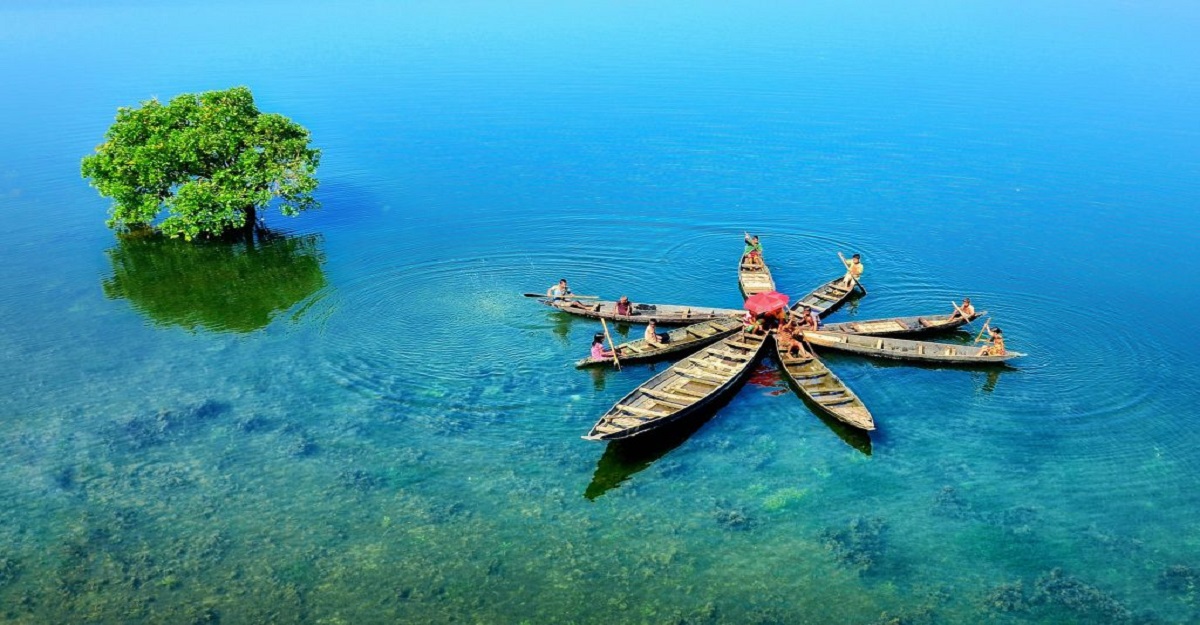
The Sundarbans, the world’s largest contiguous mangrove forest, provides a natural defense against cyclones and tidal surges while supporting biodiversity and the livelihoods of millions of people. The haor wetlands sustain fisheries, agriculture and migratory bird habitats. Rivers maintain ecological connectivity, support food production and shape the country’s social and economic life.
Yet these ecosystems face mounting pressure from pollution, encroachment, unsustainable resource extraction, infrastructure development and climate change.
Bangladesh should demand increased international support for ecosystem-based adaptation and nature-based solutions, including mangrove restoration, wetland conservation, river ecosystem protection and biodiversity recovery.
However, nature-based solutions must not become an excuse for commercial exploitation or land grabbing in the name of climate action. Projects must respect community rights, protect traditional livelihoods and ensure environmental integrity.
The protection of rivers and wetlands also requires stronger regional cooperation. As a downstream country sharing major river systems with neighboring countries, Bangladesh has a particular interest in transboundary water governance, ecological river flows and climate-resilient water management.
Climate negotiations must recognize that the resilience of a delta cannot be secured without protecting the ecological systems that sustain it.
A just and equitable transition away from fossil fuels
The global transition towards clean energy is essential, but it must be fair and inclusive. Developing countries cannot be expected to abandon fossil fuel dependency without adequate financial resources, technology transfer and alternative energy infrastructure. At the same time, the continued expansion of fossil fuel production and consumption is incompatible with the ambition of limiting global warming to 1.5°C.
Bangladesh should support a just, orderly and equitable transition away from fossil fuels, consistent with the principles of the Paris Agreement and national development circumstances.
Developed countries must lead this transition through deeper emissions reductions and provide adequate support to developing economies. For Bangladesh, expanding solar energy, rooftop solar systems, energy efficiency and other renewable technologies should become important elements of a long-term energy strategy.
But the transition must also protect workers and communities dependent on existing energy industries. Skills development, alternative employment, social protection and affordable access to energy must be incorporated into transition planning.
A transition that reduces emissions but increases poverty, inequality or energy insecurity cannot be considered just.
Technology transfer must become practical
Climate-vulnerable countries need access to affordable and appropriate technologies, not simply policy recommendations. Bangladesh requires improved technologies for flood forecasting, salinity-resistant agriculture, water management, coastal protection, renewable energy, climate-resilient infrastructure and disaster preparedness.
International cooperation must therefore go beyond technology demonstration and commercial transactions. It should facilitate affordable technology transfer, scientific collaboration, institutional capacity development and local innovation.
Universities, research institutions, local governments and civil society organizations should have greater opportunities to participate in international climate research and innovation programs. Technology must be accessible to those who need it most, including small farmers, fishers and communities living in remote and disaster-prone areas.
Climate justice requires accountability
Ultimately, all these demands are connected by one fundamental principle: climate justice. The United Nations Framework Convention on Climate Change recognizes the principle of Common but Differentiated Responsibilities and Respective Capabilities (CBDR-RC). This principle acknowledges that countries have different historical contributions to greenhouse gas emissions and different capacities to address the climate crisis.
It must remain central to international climate negotiations. Developed countries must demonstrate measurable progress in reducing emissions, fulfilling climate finance commitments and supporting vulnerable nations. Climate finance must be transparent, additional and accountable.
Equally important is accountability within recipient countries. Bangladesh must ensure that international climate resources are used effectively, transparently and in the public interest.
Weak governance, corruption, duplication of projects and inadequate monitoring can undermine even the most generous financial commitments. Climate projects must be subject to independent monitoring, public disclosure and meaningful community oversight.
Transparency and accountability should therefore be considered essential components of climate resilience, not merely administrative requirements.
Bangladesh needs a stronger collective voice
Bangladesh cannot secure meaningful outcomes through diplomacy alone. Its negotiating position must be supported by strong national coordination among government agencies, researchers, civil society organizations, environmental activists, youth networks, the private sector and communities directly affected by climate change.
The country should strengthen its engagement with the Least Developed Countries group, the G77 and China, and the Climate Vulnerable Forum to advance common priorities. At the same time, Bangladesh should use its own experiences to contribute practical solutions to global climate discussions.
Its experience in disaster preparedness, community-based adaptation, cyclone early warning, social mobilization and nature-based resilience offers valuable lessons for other vulnerable countries. Civil society must also have meaningful space in national climate policymaking and international advocacy. Climate justice cannot be achieved without the participation of the people whose lives and livelihoods are at stake.
From promises to people-centered action
COP31 is taking place at a critical moment in the global climate struggle. The challenge is no longer simply to recognize the scale of the crisis. The world already has substantial scientific evidence, policy frameworks and technological solutions. What remains inadequate is the political will, financial commitment and accountability required to implement them.
For Bangladesh, the priorities are clear: grant-based climate finance, an effective Loss and Damage Fund, increased adaptation support, recognition of climate displacement, technology transfer, ecosystem protection and a just transition.
But these priorities must ultimately serve a larger purpose: protecting human dignity, securing livelihoods, preserving ecosystems and ensuring that future generations can live in a safe and sustainable environment.
Bangladesh should not approach COP31 merely as a vulnerable country seeking international assistance. It should participate as a country demanding fairness, defending the rights of its people and contributing to solutions for a shared global crisis.
The measure of success at COP31 will not be the number of declarations adopted or speeches delivered. It will be whether the decisions taken in Antalya lead to real resources reaching vulnerable communities, stronger protection for ecosystems and greater accountability from those most responsible for the climate crisis.
The world must understand that climate justice is not an act of generosity towards vulnerable nations. It is an obligation arising from shared responsibility and unequal historical contributions.
Bangladesh must make one message unmistakably clear at COP31. The time for climate promises is over. The time for climate justice, accountability and action is now. Author: Mamun Kabir, Development Consultant and Environmental Activist